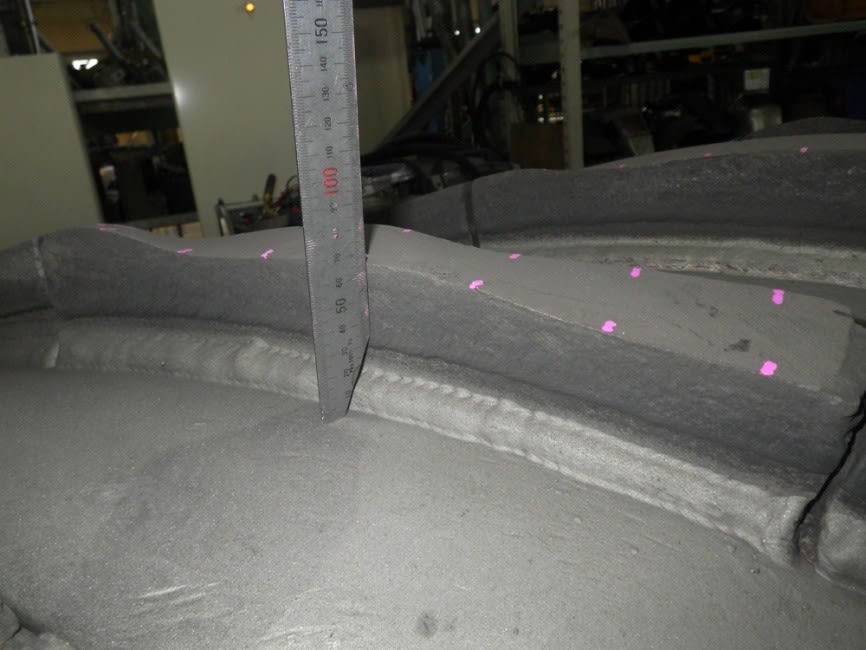
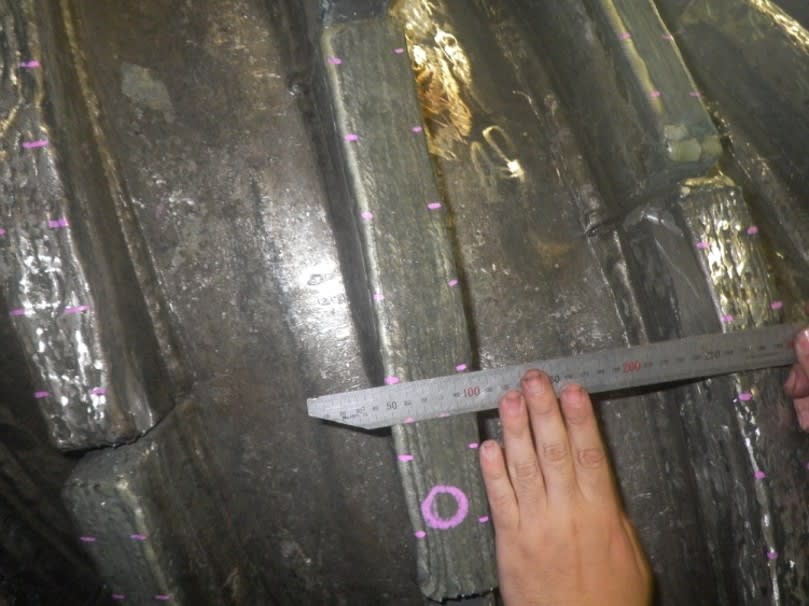
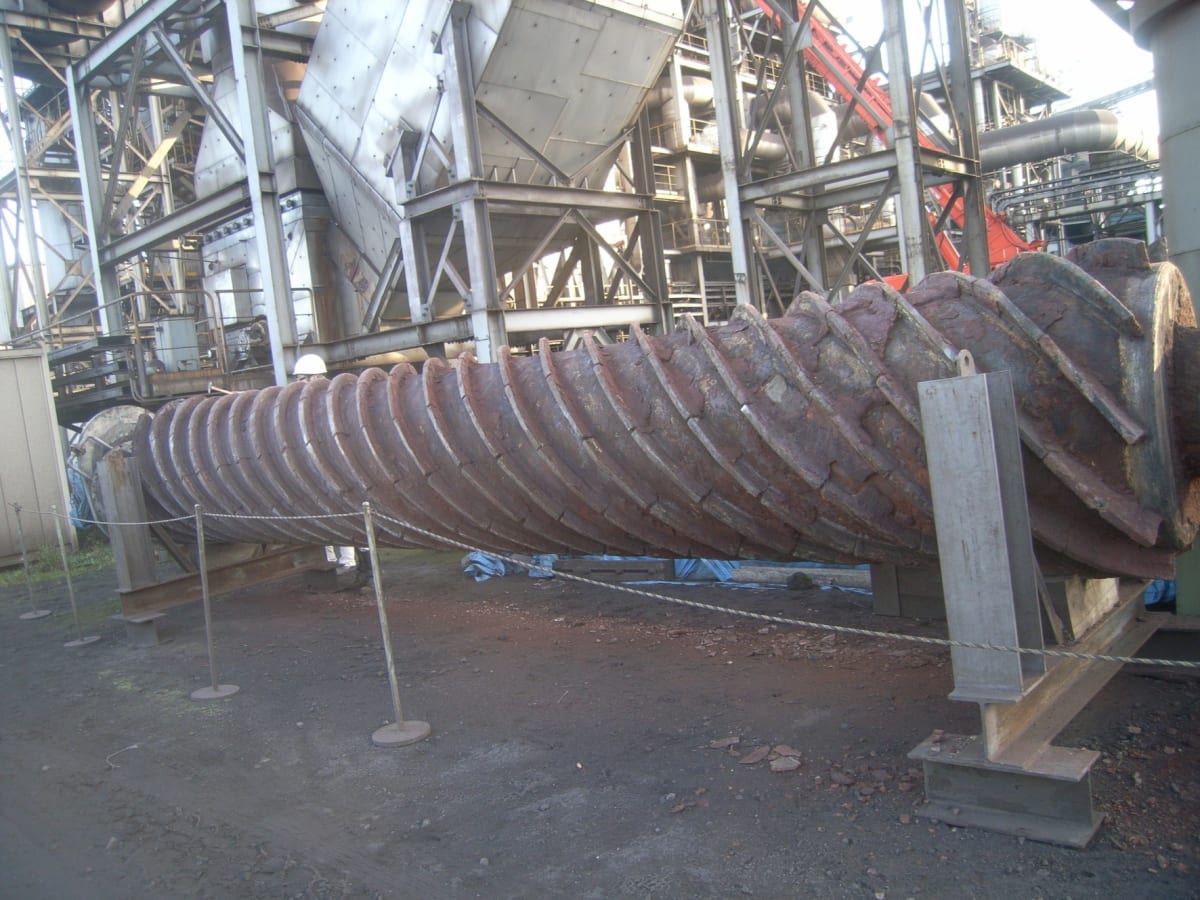
Dust recycle screws

SteelKimitsu City / Chiba Prefecture, JP

STAR (+3 pts)
APPROVED

Basic Information

Overview

Steelworks recycle iron oxide (excess dust) generated during the steelmaking and rolling processes as reduction pellets. Previously, excess dust (approximately 300,000 MT per year) was disposed of through landfilling or sold to external parties. As the surplus dust contains high levels of zinc, it had not been used in blast furnaces because zinc deposits would form inside the furnace, hindering its operation. Consequently, a method was developed to remove the zinc from the high-zinc steelmaking dust (300,000 MT) through a reduction reaction within a rotary hearth furnace, thereby enabling its reuse in blast furnaces. The process in the rotary hearth furnace involves pellet feeding → heating → reduction using carbon (to remove zinc and CO gas) → discharge → cooling → transport to the blast furnace. The discharged pellets are transported to the blast furnace via a screw conveyor.

Industry

Steel

Location

Kimitsu City / Chiba Prefecture, JP

Component/Workpiece

Dust recycle screws

Business Type

Integra - Workshop

Job Type

Repair

Type of Wear

Abrasion
Impact

Base Metal

PH35C(≠SCH46) (Hialoy 3-HP-5)+StelloyNo.1(10mm)+PTA(Stelloy No.1+Cr₃C₂(40vol.%))

General Dimensions (mm)

4.5MT
Problem Description

The challenge the customer was facing

Specifications for the screw conveyor in steel dust handling equipment ・Base material ・Operating temperature 800°C to 1000°C ・Function of the screw Primarily designed to convey pellets approximately 100 mm square, it also serves to scrape out pellets that have become stuck to the furnace floor. Shaft: SUS316L (water circulates inside the shaft) Blades: Heat-resistant steel (equivalent to SCH46) Previously, repairs were carried out by another company, involving restoration to the specified height using SCH46 alloy steel, followed by a single layer of hardfacing with a material equivalent to Stellite No. 6. Due to rapid wear, repairs had to be repeated every six months.

Previous Service Life

5mo

Competitor

neis

Welding Alloys Solution

How WA solved the challenge

① Restoration to the specified height using Hialoy 3-HP-5 ② Build-up welding (MIG) of Stellite No. 1 (10 mm thick) ③ (Stellite No. 1 + Cr₃C₂ (40 vol.%) (PTA))

Product Category

Integra Services

Product Description

Screw build-up repair on dust recycling equipment

Technical Advantages

Stellite No. 1, which offers wear resistance in high-temperature environments, is used. Furthermore, by incorporating Cr3C2—a carbide that does not oxidise even at temperatures exceeding 1000°C—into Stellite No. 1, a further improvement in wear resistance is anticipated (PTA welding).

Images (3)

Photos and visuals for this case study

Case study image 1Case study image 2Case study image 3

Cost Reduction Analysis

Annual Cost Before

€222,000.00

Annual Cost After

€57,500.00

Annual Savings

€164,500.00

74.0% reduction

Annual Cost Comparison
Previous Solution€222,000.00
WA Solution€57,500.00

Cost Breakdown

Part Information
Cost of Part (A):€111,000.00
Cost of WA Solution (B):€138,000.00
Parts Used/Year (E):2
Solution Lifetime Comparison
Previous Solution:5.1 months
WA Solution:2.0 years
WA solution lasts 4.8x longer!
Before (Previous Solution)
Maintenance/Repair (F):-
Disassembly Cost (G):-
Downtime/Event (H):-
After (WA Solution)
Maintenance/Repair (F):-
Disassembly Cost (G):-
Downtime/Event (H):-
Formula Used

Annual Cost = (A × E) + (E − 1) × (F + G + H)

Where: A = Cost of Part, E = Parts/Year, F = Maintenance, G = Disassembly, H = Downtime

Welding Procedure Specification (WPS)

No WPS data available for this case study

Submission Details

Contributor

Takanori Sasaki

takanori.sasaki@waj.co.jp

Created

April 30, 2026

Submitted

April 30, 2026

Approved By

Bastien Gerard

May 3, 2026